Phone:
+971 56 432 4710
Physical address:
AL KHABEESI BUILDING salah Al din street Office no G-01 - 646 Dubai

Phone:
+971 56 432 4710
Physical address:
AL KHABEESI BUILDING salah Al din street Office no G-01 - 646 Dubai
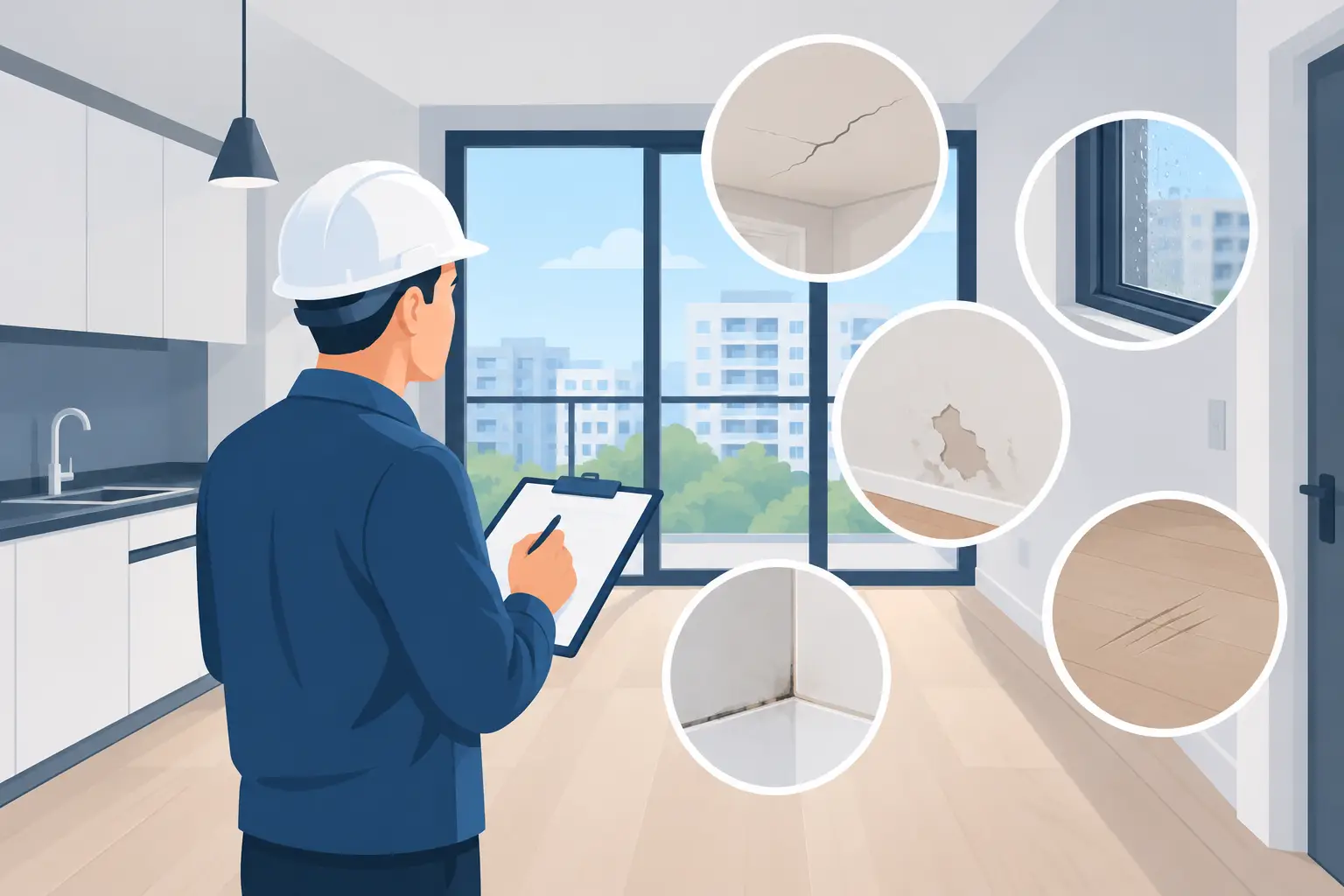
Apartment handover defect examples to identify before signing, from leaks and poor finishes to electrical, HVAC, and safety issues in UAE homes today.
The keys may be ready, the lobby may look immaculate, and the apartment may be staged to impress. But the handover is the point where a buyer accepts the condition of the property, not just its appearance. Knowing the most common apartment handover defect examples helps you identify problems while the developer or contractor is still responsible for correcting them.
A proper snagging inspection looks beyond paint marks and loose handles. It assesses visible finishes, functional systems, safety provisions, and workmanship that could turn into expensive maintenance after move-in. In the UAE, where cooling systems, water pressure, and high-rise MEP services have a direct impact on daily comfort, this level of checking is especially valuable.
A handover defect is any issue that means the apartment is incomplete, poorly finished, not operating as intended, or not delivered in line with the agreed specification and applicable requirements. Some defects are obvious on a first walk-through. Others only appear when taps are run, appliances are tested, doors are operated repeatedly, or electrical points are checked.
Not every minor imperfection has the same urgency. A small paint touch-up may be straightforward, while a persistent drainage odor, low air-conditioning performance, or water ingress can indicate a larger issue. The purpose of a defect report is to document each finding clearly, with its location, supporting photos, and practical rectification guidance. That gives the owner a defensible record when requesting repairs.
Finishes are often the first thing buyers notice, but they still need a disciplined inspection. Common findings include uneven paint coverage, roller marks, stains, cracks around corners, poorly sealed joints, chipped tiles, hollow-sounding floor tiles, damaged grout, and uneven flooring transitions.
Hairline cracks can result from normal settling, but they should not simply be dismissed. Their position, length, and pattern matter. A recurring crack near a window opening, beam, or ceiling joint deserves closer review, particularly if it is accompanied by staining or moisture.
Tile defects also require more than a visual glance. Cracked or chipped tiles are clear defects, but hollow tiles may not be apparent until they are tapped. Voids beneath tiles can lead to cracking, debonding, and replacement work later. Matching replacement tiles may also be difficult once a project has been completed.
A door that closes only when lifted, rubs against the frame, or has a loose lock is not a cosmetic concern. It affects security, privacy, and everyday use. Check that every internal, entrance, bathroom, and balcony door opens, closes, latches, and locks smoothly. Look for damaged veneers, misaligned frames, loose hinges, and incomplete sealant.
Windows and sliding balcony doors should be checked for smooth operation, secure locking, damaged glass, scratched frames, and gaps in weather seals. Poor sealing can allow dust, heat, noise, and water into the apartment. On balconies, review floor slopes, drain positions, railing stability, tile condition, and the condition of the external sealant around doors and windows.
Built-in wardrobes and kitchen cabinetry also deserve attention. Misaligned cabinet doors, loose shelves, swollen panels, sharp unfinished edges, missing handles, and drawers that do not slide correctly are frequent handover findings. These issues may seem small individually, but they quickly add up in a newly delivered home.
Bathroom and kitchen defects can be disruptive because water finds its way into concealed spaces. Inspectors test taps, mixers, shower controls, basins, toilets, bidet sprays, floor drains, and under-sink connections. They look for leaks, poor water pressure, loose fittings, damaged silicone, slow drainage, and standing water caused by incorrect floor falls.
A bathroom floor should guide water toward the drain, not toward the doorway or into a dry area. Pooling water may point to poor tile gradients or an improperly installed drain. Water staining beneath a vanity, around a toilet base, or inside a kitchen cabinet can indicate an active or previous leak.
Drain odors should be recorded rather than ignored. They can result from dry traps, blocked lines, poor venting, or installation issues. In a vacant apartment, some causes may be simple to resolve, but the problem should still be tested and confirmed before acceptance.
Electrical defects are among the most critical apartment handover defect examples because they can affect both safety and usability. Typical issues include dead outlets, loose faceplates, incorrectly labeled distribution boards, non-functioning switches, flickering lights, missing earth connections, and incomplete or poorly fitted fixtures.
Every accessible outlet, switch, data point, and light fitting should be tested. The distribution board should be neat, labeled, and accessible. Circuit breakers and residual-current protection should be checked by a qualified inspector using appropriate test equipment, rather than assumed to be correct because the lights turn on.
Pay attention to location as well as operation. A socket placed too close to a wet area, an inaccessible switch, or an outlet hidden behind fixed cabinetry can affect safe use and create avoidable frustration after move-in.
In a UAE apartment, air-conditioning performance is not a minor comfort issue. It is a core handover item. Common defects include weak airflow, noisy fan coil units, thermostat faults, condensate leaks, blocked filters, damaged grilles, and rooms that do not cool evenly.
Cooling should be assessed while the system is operating, ideally with temperature measurements and a review of visible components. Water dripping from an AC unit, staining around a ceiling access panel, or persistent vibration can signal a condensate drainage, installation, or maintenance problem.
Bathrooms, kitchens, and utility areas also need effective ventilation. An extractor fan that runs but does not draw air properly may contribute to moisture, odors, and mold risk. Where accessible, ventilation grilles should be clean, secure, and free from obvious obstruction.
If appliances are included in the sale, test them before signing the handover documents. Ovens, cooktops, hoods, refrigerators, dishwashers, washing machines, and water heaters should be installed correctly, powered, and free from visible damage. Confirm that appliance doors close properly and that protective packaging or construction debris has not been left in vents, filters, or drain connections.
Kitchen hood extraction is often overlooked. A hood may light up and make noise while providing weak extraction. This is worth checking, especially in apartments where cooking odors can circulate quickly. Gas systems, where present, require particular care and should be assessed by qualified professionals.
Your unit does not operate in isolation. Common-area and building-service defects can affect safety, access, value, and future maintenance. Examples include malfunctioning intercoms, damaged fire doors, poor corridor finishes, elevator issues, incomplete parking markings, water leaks in basements, and blocked common-area drains.
An individual buyer may not be responsible for inspecting every shared system, but visible concerns should be documented and raised through the appropriate handover or building-management process. For investors, these conditions can be an early indicator of how well a property may be maintained after occupancy.
A verbal request is easy to overlook. A structured report is harder to dispute. Each defect should identify the exact room or location, describe the issue without vague wording, include clear photos, and state the expected corrective action. For example, “Bathroom 2: water pools at the entrance after shower test; adjust floor drainage slope and retest” is more useful than “bathroom drainage issue.”
Prioritize defects by impact. Safety, water intrusion, electrical faults, AC performance, and non-functioning equipment should be addressed before cosmetic items. Cosmetic defects still matter, but separating urgent findings from touch-ups makes the rectification process clearer and supports faster decisions.
It also helps to return for a reinspection once repairs are claimed as complete. A closed item should be verified, not assumed. Sometimes a contractor addresses the visible symptom while leaving the underlying cause unresolved.
A careful owner can identify many visible defects, especially with enough time and a room-by-room process. The trade-off is that technical faults often require specialist knowledge and calibrated equipment. A professional snagging inspection brings a systematic method to electrical testing, HVAC assessment, moisture checks, plumbing operation, finishes, and defect documentation.
For a new-build purchase, this protects the period when rectification responsibility is clearest. For a resale apartment, it can reveal maintenance exposure before completion. SmartSnag provides certified inspections and detailed photo reports within 24 to 48 hours, giving buyers and investors a practical record to support a stronger handover discussion.
Before you sign, slow the process down long enough to test what will matter after the excitement of collection day has passed. A documented defect is a problem with a path to correction; an overlooked one can become your responsibility.