Phone:
+971 56 432 4710
Physical address:
AL KHABEESI BUILDING salah Al din street Office no G-01 - 646 Dubai

Phone:
+971 56 432 4710
Physical address:
AL KHABEESI BUILDING salah Al din street Office no G-01 - 646 Dubai
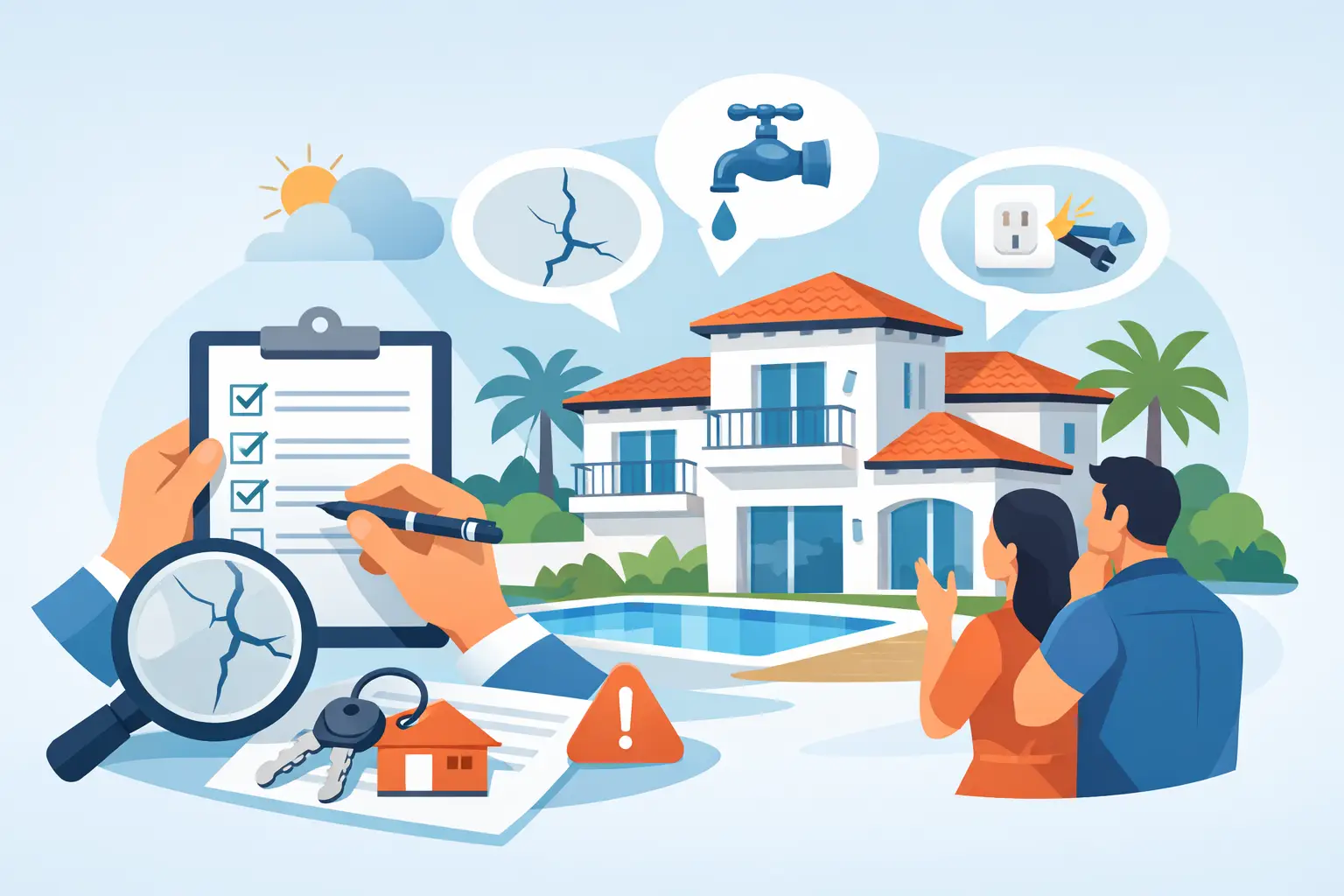
Common villa handover problems can turn a new home into a costly repair project. Learn what to inspect, document, and resolve before accepting the keys.
A villa can look complete during a handover walkthrough while still concealing defects that affect comfort, safety, and long-term maintenance costs. Common villa handover problems are often found behind access panels, above ceilings, beneath tiled surfaces, and within systems a buyer may not have the tools or time to test properly. Once acceptance is signed, securing prompt rectification can become more difficult.
For villa buyers in the UAE, a detailed pre-handover inspection is not about finding minor cosmetic marks for the sake of it. It is a quality-control process that documents whether the property has been delivered to an acceptable standard and whether its finishes, structure, and MEP systems function as intended. The right time to identify defects is before keys are accepted and before the developer’s rectification team moves on.
Villas have more systems, more surface area, and more outdoor elements than a typical apartment. A defect in one room may be straightforward to correct. A fault affecting a roof, external waterproofing system, drainage line, electrical circuit, or central cooling system can be far more disruptive and expensive.
The risk also varies by property type. A newly built villa may have construction and finishing defects, while a secondary-market villa may show wear, undocumented modifications, aging MEP components, or water damage from previous leaks. Renovated villas require another layer of scrutiny because new finishes can conceal poor preparation or incomplete work.
A proper inspection creates a dated record of observed issues, supported by photos and clear rectification guidance. That record gives owners a practical basis for requesting repairs and helps prevent vague discussions about what was present at handover.
Cosmetic defects are easy to dismiss, but they can reveal wider workmanship concerns. Look beyond obvious paint splashes and scratches. Inspect walls in natural and artificial light for patchy paint, hairline cracking, waviness, poor edge lines, and inconsistent texture. Check whether doors, skirting boards, wardrobes, and ceiling details meet cleanly without visible gaps or damaged corners.
Flooring deserves the same attention. Hollow-sounding tiles may indicate inadequate adhesive coverage. Uneven tiles, cracked grout, chipped edges, loose thresholds, and inconsistent joints can worsen with use. Timber, laminate, or vinyl floors should be checked for lifting, movement, gaps, water damage, and poor transitions between rooms.
Not every blemish has the same priority. A small paint touch-up is normally a simple rectification item. Repeated cracks, widespread tile hollowness, or movement at joints may require further investigation before accepting a superficial repair.
Water-related defects are among the most costly villa handover issues because moisture can travel before it becomes visible. Bathrooms, kitchens, balconies, roofs, planters, utility areas, and external walls all require close attention.
Inspect ceilings and walls for staining, blistering paint, discoloration, mold, and soft plaster. Open vanity cabinets and check beneath sinks. Test shower areas, floor drains, taps, and toilets while watching for slow drainage, leaking connections, or water escaping the intended wet zone. If safe and permitted, water testing can help reveal drainage failures on balconies and external terraces.
Outside, confirm that paving falls away from the villa where required and that rainwater outlets are clear and properly positioned. Water pooling against external walls or at door thresholds is not merely an appearance issue. Over time, it can compromise finishes, cause internal dampness, and place unnecessary pressure on waterproofing layers.
An electrical installation may appear finished because switches and sockets are present. That does not confirm correct operation, safe connections, adequate labeling, or proper circuit protection. Testing should cover a representative range of outlets, light fittings, switches, distribution boards, doorbells, external lighting, and any smart-home controls included with the villa.
Common concerns include loose sockets, non-functioning switches, missing cover plates, incorrectly labeled breakers, damaged fittings, and circuits that do not operate as expected. External outlets and lighting require particular care because they are exposed to heat, dust, and moisture.
The electrical panel should be accessible, clearly labeled, and free from obvious defects. Buyers should also confirm what equipment is included at handover, especially where the villa has gates, landscape lighting, security systems, intercoms, solar equipment, or automation controls. Assumptions about included items often cause avoidable disputes.
Cooling performance matters immediately in a UAE villa. Yet AC defects are commonly missed during a short walkthrough because a system may switch on without delivering balanced cooling across the property.
Inspectors assess visible installation quality and test operation where possible. Key warning signs include weak airflow, abnormal noise, water leakage from indoor units, unresponsive thermostats, poorly secured grilles, damaged insulation, and rooms that remain noticeably warmer than others. Condensate drainage should also be reviewed because blocked or poorly installed drain lines can lead to ceiling damage and mold.
Ventilation is equally relevant in bathrooms, kitchens, utility rooms, and closed storage spaces. Extract fans that are noisy, ineffective, or disconnected can contribute to humidity buildup. In a large villa, poor ventilation can affect areas that are rarely used, meaning the issue may remain hidden until damage has developed.
A good-looking bathroom can still have leaking pipework, poor drainage, or inconsistent water pressure. Run taps and showers, flush each toilet, and check whether hot water reaches fixtures as expected. Observe drainage speed in basins, showers, and floor drains, particularly in ground-floor bathrooms and outdoor service areas.
Look for loose sanitaryware, poorly sealed shower screens, dripping mixers, damaged silicone, and movement around toilet bases. Kitchen plumbing should be checked beneath sinks and around appliance connections. If a water heater, pump, filtration unit, or irrigation system is included, confirm its condition, accessibility, and operation.
Drainage odors are another warning sign. They may indicate dry traps, poor venting, incomplete connections, or drainage issues that deserve investigation before occupancy.
Villa exteriors are exposed to extreme heat, wind, dust, and occasional heavy rainfall. Doors and windows should open, close, lock, and seal properly. Check sliding systems for smooth movement, glazing for scratches or cracks, and frames for gaps or poor sealant. Water ingress around windows and doors may only become apparent after weather exposure, so visible installation quality matters.
Where access is available, roof areas should be reviewed for damaged finishes, unprotected services, blocked outlets, loose equipment, or signs of ponding. External boundaries, gates, paving, garage floors, pool surrounds, and landscape works should also be inspected. Cracked paving, unstable covers, missing drain grates, and inadequate slopes can create both maintenance and safety concerns.
A handover appointment can feel rushed, particularly when a developer representative is waiting for paperwork to be completed. Buyers may focus on room layouts, fixtures, and finishing colors while overlooking concealed risks. A careful inspection requires a methodical room-by-room process, appropriate testing equipment, and an understanding of how villa systems should be installed and perform.
Photographs alone are not enough. Each defect should be described clearly, located precisely, and assigned an appropriate priority. This helps distinguish urgent safety or water-intrusion issues from routine finishing repairs. It also makes the rectification request easier for the developer or contractor to action without confusion.
SmartSnag provides certified villa inspections with detailed defect documentation, photos, and practical rectification guidance, typically delivered within 24 to 48 hours. This gives buyers a clear record to use before accepting handover and during follow-up with the responsible party.
Do not let a long snag list create unnecessary alarm. Most new villas have some defects, and many can be corrected efficiently when they are documented early and communicated clearly. The priority is to ensure that significant issues are not minimized as ordinary touch-ups.
Ask for a written rectification plan that identifies what will be repaired, who is responsible, and when the work will be completed. Keep copies of reports, emails, photos, and handover documents. After repairs are completed, arrange a reinspection or verify each item carefully before closing the matter. A repaired defect should be tested, not simply marked complete because it looks better from a distance.
A villa handover is a critical point in the life of the property. Taking the time to inspect it properly protects your investment, supports a stronger rectification request, and lets you move in with greater confidence.