Phone:
+971 56 432 4710
Physical address:
AL KHABEESI BUILDING salah Al din street Office no G-01 - 646 Dubai

Phone:
+971 56 432 4710
Physical address:
AL KHABEESI BUILDING salah Al din street Office no G-01 - 646 Dubai
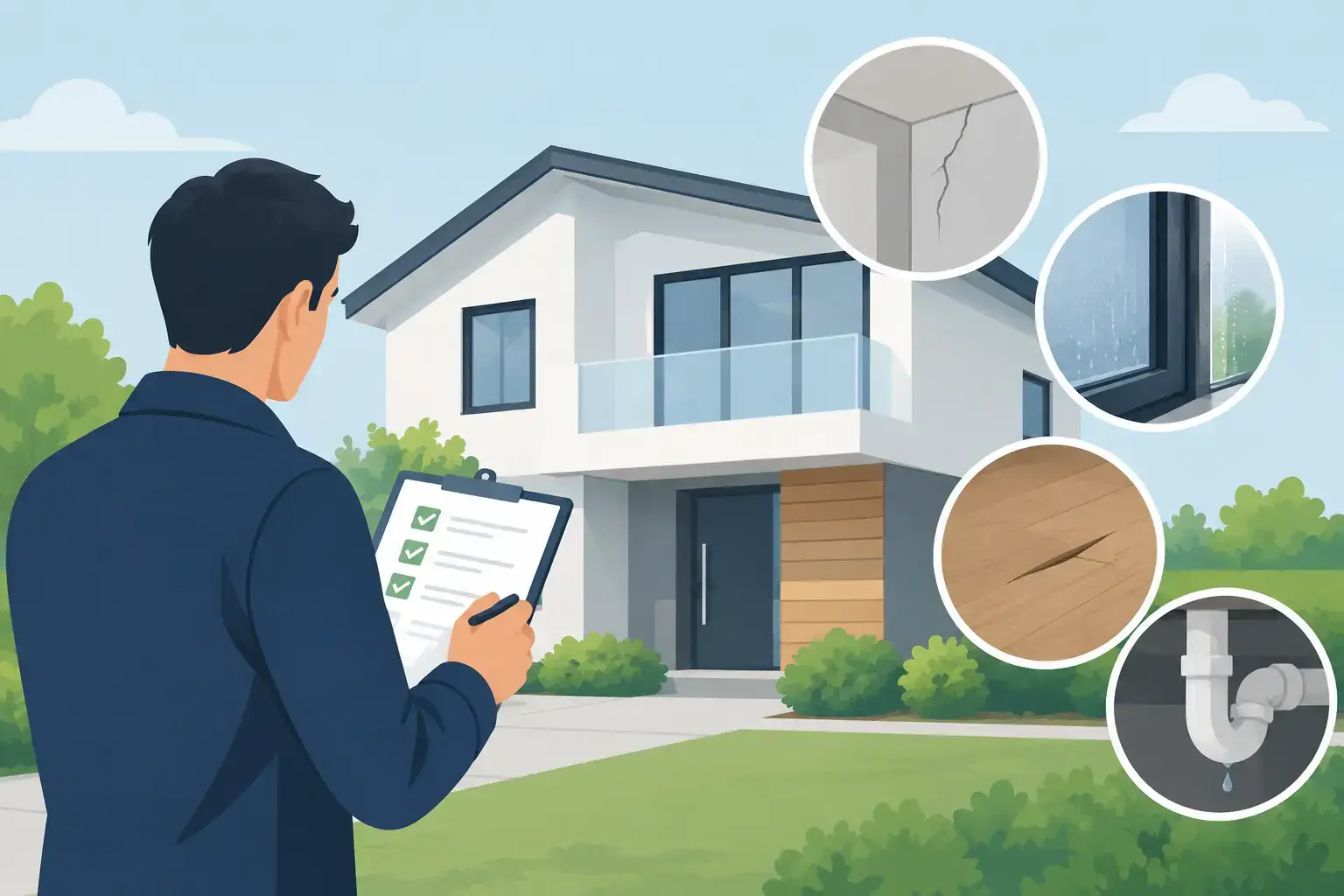
Property defects can affect safety, value, and handover timelines. Learn what to check, document, and rectify before accepting UAE property confidently.
A fresh coat of paint, polished floors, and new fittings can make a property look ready for handover. They do not confirm that the plumbing holds pressure, the AC cools every room properly, or the electrical installation is safe. Property defects are often hidden behind finished surfaces, inside service voids, or visible only when systems are tested. Finding them before acceptance gives the owner documented evidence and gives the developer or contractor a clear opportunity to rectify the work.
For buyers, investors, landlords, and tenants, an independent inspection is not about looking for minor imperfections for their own sake. It is a quality-control process that protects the property’s value, avoids avoidable repair bills, and creates a factual record of its condition at a critical point in the transaction.
Handover is a milestone, not a guarantee of quality. Once keys are accepted, the practical challenge of proving that an issue existed before occupancy can become harder. Developers may have a defects liability period, often called DLP, but reporting issues early and with clear evidence makes the rectification process more efficient.
Some defects are cosmetic and straightforward to correct, such as scratched glass, uneven paint, chipped tiles, damaged cabinetry, or poorly aligned doors. Others can affect comfort, operating costs, safety, and long-term durability. A slow leak below a vanity may damage cabinetry and adjacent finishes over time. Inadequate AC airflow can lead to uncomfortable rooms, excess energy use, and moisture concerns. Improper drainage on a balcony, roof, or wet area can create water pooling that is expensive to resolve after the property is occupied.
The cost of a defect is not always the cost of the repair. It can also mean delayed move-in, disrupted tenants, disputes with a contractor, lost rental income, or reduced buyer confidence during a resale. A detailed inspection helps turn a vague concern into a specific, trackable rectification item.
A professional inspection considers the property as a complete system rather than a collection of rooms. Visual checks are important, but they should be supported by functional testing, measurement, and careful documentation.
Finish defects are usually the easiest to notice, yet they should still be recorded precisely. Inspectors look for cracks in walls and ceilings, inconsistent paint coverage, hollow or loose tiles, grout gaps, damaged stone, uneven flooring, and poorly finished sealant around kitchens and bathrooms.
Doors, windows, cabinets, and built-in wardrobes also need to be operated, not simply viewed. A door that rubs against the frame, a window that does not lock, or a cabinet hinge that is misaligned may appear minor. However, these issues can signal poor installation, affect security, or worsen with regular use.
In the UAE, exterior-facing windows and doors deserve particular attention because effective sealing is essential for controlling dust, heat, and moisture. Scratched glazing, damaged gaskets, incomplete sealant, and weak locking mechanisms should be documented before handover.
Water-related issues are among the most consequential defects because leaks may remain unseen until damage has developed. An inspection should include checks of taps, mixers, toilets, basins, showers, water heaters, drainage flow, and visible pipe connections.
Inspectors look for leaks beneath sinks, unstable sanitary fixtures, inadequate water pressure, loose fittings, blocked drains, and incorrect falls in wet areas. Water should move toward the drain, not collect in corners of a shower or balcony. Where suitable, moisture detection tools can help identify signs of concealed moisture around plumbing points.
Not every slow drain is caused by the same issue. It could be temporary construction debris, an installation problem, or an incorrect floor slope. The right response depends on the cause, which is why observations should be recorded with location-specific details rather than broad statements such as “drainage issue.”
Electrical defects can range from a non-functioning socket to a more serious concern involving circuit protection, loose connections, or incorrectly installed accessories. A proper review checks outlets, switches, light points, distribution boards, labeling, and visible electrical fittings. The aim is to identify issues that require correction by qualified personnel before the property is put into regular use.
Mechanical, electrical, and plumbing systems – often referred to as MEP – are particularly important in apartments, villas, offices, and warehouses. AC systems should be assessed for cooling performance, airflow, control response, drainage, noise, and accessible installation quality. Poor cooling in one room may result from a balancing issue, blocked airflow, thermostat problems, or a larger system fault. It should not be dismissed as a minor inconvenience.
Ventilation also matters in kitchens, bathrooms, utility areas, and enclosed spaces. Weak extraction can contribute to humidity, odors, and mold risk over time. In commercial and industrial properties, the inspection scope may need to extend to equipment rooms, fire safety provisions, loading areas, shutter doors, and warehouse floor conditions.
The building envelope includes the elements that separate the property from the outdoor environment: walls, glazing, seals, roofs, balconies, terraces, and external doors. Defects here can lead to water ingress, air leakage, heat gain, and premature material deterioration.
Check balconies and terraces for drainage, tile condition, handrail stability, cracks, sealant quality, and water pooling. For villas, the inspection may also include roof access areas, boundary walls, exterior finishes, driveways, landscaping interfaces, and outdoor lighting. A small crack may be cosmetic, but recurring cracks, poorly sealed joints, or signs of dampness deserve closer assessment.
A useful report does more than list faults. It should make it easy for the responsible party to locate, understand, and correct each item. That means every defect should be documented with clear photographs, a precise room or area reference, a concise description, and practical rectification guidance.
For example, “bathroom issue” is not actionable. “Water pooling observed at the rear-left corner of the master bathroom shower area after flow testing; assess floor fall and drainage performance” gives the contractor a defined starting point.
The report should also distinguish between workmanship defects, functional failures, incomplete work, damage, and items that require further investigation. This helps owners prioritize concerns without overstating what can be confirmed through a non-invasive inspection. Some concealed conditions cannot be fully verified without opening finishes or conducting specialist testing. A professional inspector should be clear about those limits.
Fast reporting matters because handover and rectification schedules can move quickly. SmartSnag provides detailed, photo-supported defect reports within 24 to 48 hours, helping clients raise issues while the handover process is still active.
The best time for a pre-handover inspection is after construction is substantially complete and services are operational, but before final acceptance and key collection. This allows the developer or contractor to address identified items before the property becomes the owner’s day-to-day responsibility.
A pre-handover inspection is not the only time property condition should be checked. A DLP inspection can identify issues that emerge after occupancy, such as AC performance concerns, leaks, cracks, drainage problems, or defects that become apparent through normal use. Secondary-market buyers benefit from inspections before completing a purchase, while landlords and tenants can use move-in and move-out inspections to establish a transparent condition record.
Post-renovation checks are equally valuable. Renovation work can affect finishes, plumbing, electrical systems, joinery, waterproofing, and AC performance. Even skilled contractors benefit from an independent review before final payment or occupancy.
A long defect list does not automatically mean a poor investment or failed project. New properties often require a period of final adjustment. What matters is the nature of the issues, the quality of the evidence, and whether rectification is properly managed.
Share the report formally with the developer, contractor, or responsible party and request a rectification plan with target dates. Keep written records of communications, site visits, and completed repairs. Once work is marked complete, arrange a reinspection or verify the specific items carefully before closing them out.
Avoid accepting verbal assurances in place of documented action, especially for leaks, AC faults, drainage defects, electrical concerns, or recurring cracks. These are issues where a visible improvement may not confirm that the underlying cause has been resolved.
Your property should be delivered as an asset you can occupy, lease, or sell with confidence – not as a collection of unanswered questions. A thorough inspection before acceptance gives you the clarity to request the right repairs while responsibility is still clear.