Phone:
+971 56 432 4710
Physical address:
AL KHABEESI BUILDING salah Al din street Office no G-01 - 646 Dubai

Phone:
+971 56 432 4710
Physical address:
AL KHABEESI BUILDING salah Al din street Office no G-01 - 646 Dubai
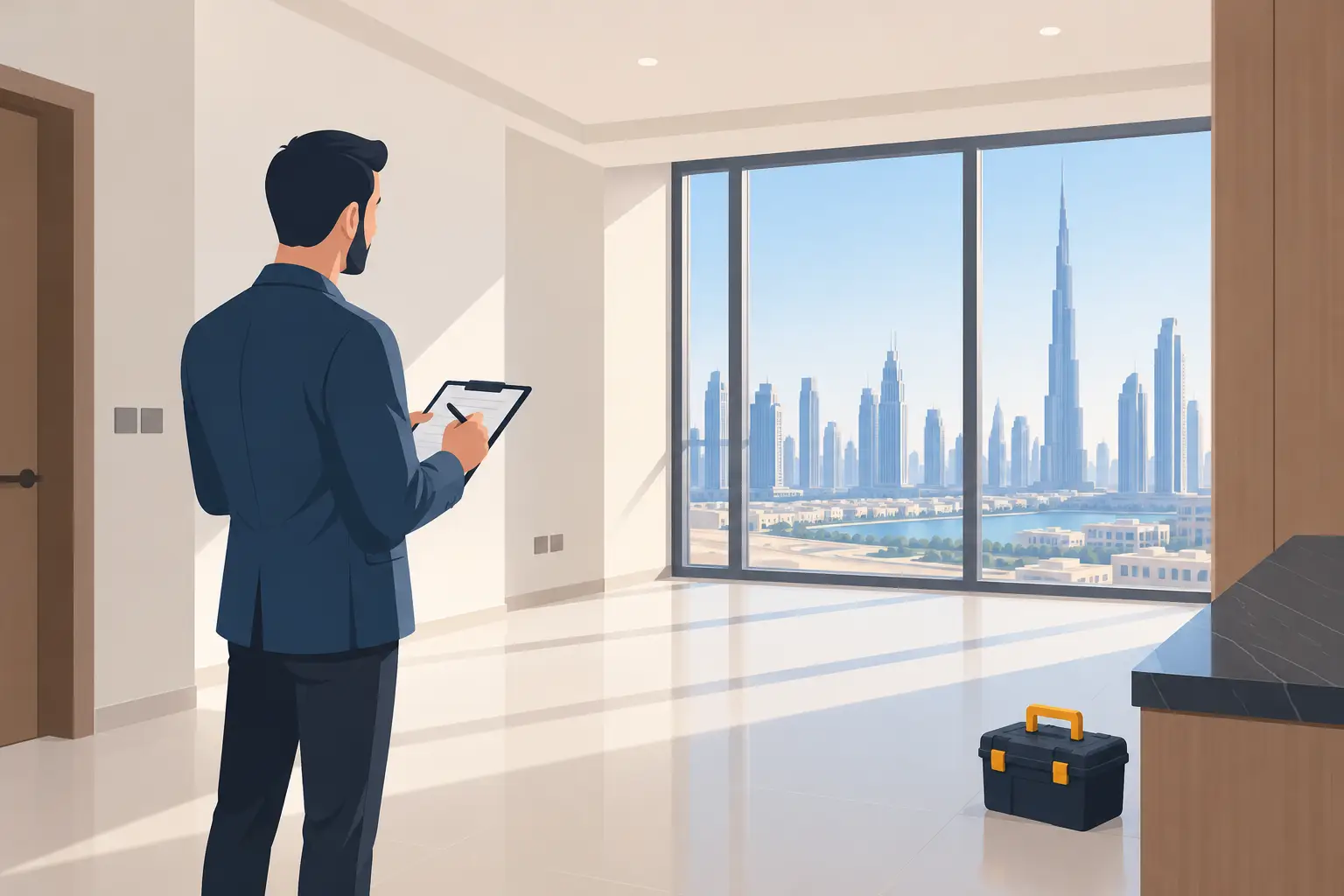
Apartment snagging Dubai identifies hidden defects before handover, giving buyers clear evidence for rectification and stronger investment protection today.
The handover appointment can feel like the finish line after months, sometimes years, of payments and anticipation. But accepting the keys to a new apartment without a professional inspection can also mean accepting defects that should have been corrected by the developer. Apartment snagging Dubai gives buyers a documented, independent view of the property’s condition before handover, when the responsibility for rectification is still clear.
A freshly painted wall, polished floor, and new fixtures can make an apartment appear complete. They do not confirm that the drainage falls correctly, electrical points work safely, air conditioning performs as expected, or windows and doors are properly aligned. A thorough snagging inspection protects your position by finding defects, recording their location and condition, and presenting them in a format that supports corrective action.
New construction is complex. Multiple trades work on the same apartment, often close to completion deadlines. That can leave behind workmanship issues, incomplete finishing, damaged surfaces, or faults concealed behind a clean presentation. Some are minor cosmetic snags. Others can affect daily comfort, operating costs, safety, and long-term maintenance.
The timing matters as much as the inspection itself. Before handover, a buyer has the strongest opportunity to request that defects are resolved as part of the developer’s delivery obligations. After acceptance, proving whether a problem was pre-existing can become more difficult, particularly if the issue is subtle or only appears after occupancy.
An apartment inspection should not be treated as a substitute for your own walkthrough. You should still check whether the layout, finishes, appliances, parking allocation, and promised features match your purchase documents. A certified inspector adds a different level of protection: systematic testing, construction knowledge, and defect documentation that is not based on a quick visual impression.
A proper inspection considers the apartment as a working system, not just a collection of rooms. The scope varies by unit type, building access, and the services available at the time of inspection, but it normally covers architectural finishes, MEP systems, fixtures, and visible signs of poor workmanship or damage.
Inspectors assess wall and ceiling finishes for cracks, uneven surfaces, paint defects, and poor touch-ups. They check flooring for chips, scratches, hollow sounds where relevant, uneven joints, damaged skirting, and incomplete sealant. Kitchens, wardrobes, countertops, cabinets, and sanitary fittings are reviewed for alignment, damage, operation, and installation quality.
Doors and windows deserve close attention. A door that drags, fails to latch, has uneven gaps, or does not seal properly can be more than an inconvenience. Window alignment, locking, handles, glazing condition, and sealant quality may affect security, noise control, and water resistance. Balcony doors and exterior-facing windows require particular care in Dubai’s heat, dust, and occasional heavy rain.
MEP defects are often the most expensive and disruptive issues to discover after moving in. An inspection can identify visible concerns with sockets, switches, distribution boards, light points, extractor fans, water supply, drainage, and plumbing fixtures. Testing is performed within the access and operational limitations of the property.
Air conditioning is central to apartment living in the UAE. Inspectors review visible components and operation where systems are active, while also noting issues such as poor airflow, unusual noise, damaged grilles, thermostat concerns, condensate drain problems, and incomplete sealing around service openings. A full diagnosis of an inactive or restricted system may require additional specialist access, so the report should clearly state any limitations rather than assume performance.
Bathrooms and kitchens also receive detailed attention because small defects here can develop into larger problems. Poor silicone application, loose fixtures, slow drainage, leaks, missing grout, and incorrect falls can lead to water damage, odor, mold, or disputes later. Finding these items before handover is far simpler than arranging repairs after your furniture is in place.
Not every snag has the same urgency. A transparent report distinguishes between minor finish defects and issues that may require prompt rectification or further technical review. This helps you focus discussions with the developer or contractor on the items that carry the greatest practical risk.
Cosmetic snags might include paint blemishes, scratched metalwork, uneven sealant, chipped tiles, or cabinet-door alignment. These should still be corrected because you are entitled to receive the apartment in the agreed condition. However, defects involving electrical safety, water leakage, drainage, loose installations, inoperative equipment, compromised glazing, or poor AC performance may have wider consequences if left unresolved.
The most useful reports do not simply state that something is wrong. They identify the room or area, describe the issue clearly, include photographs, and provide rectification guidance. That level of evidence reduces ambiguity and gives the responsible party a clear action list.
For a new apartment, the preferred time is after the developer confirms the unit is ready for inspection but before you sign final acceptance or complete handover. This gives enough time to submit the snag list and arrange rectification without weakening your position.
If you have already taken possession, an inspection can still be valuable during the defect liability period, commonly called the DLP. Defects may only become apparent after systems have been used under normal conditions. A DLP snagging inspection helps document concerns while there is still an opportunity to seek correction under the applicable terms of your agreement.
Apartment snagging is also relevant in the secondary market. A resale property may not have developer handover obligations in the same way, but an independent inspection helps a buyer understand condition before committing. It can reveal maintenance needs, unauthorized alterations, water damage indicators, aging MEP components, or workmanship concerns from previous renovations. The purpose shifts from handover rectification to informed decision-making and negotiation.
A report only protects you if it is used promptly and professionally. Submit it through the developer’s or property manager’s designated channel, keep a dated record of every communication, and ask for a rectification plan or follow-up inspection date. Avoid relying only on verbal assurances, especially for defects that affect safety, water ingress, or building services.
Once rectification is reported complete, revisit the apartment or arrange a reinspection. A closed item should be checked, not assumed. A patch repair may address the visible mark while leaving the underlying cause unresolved. This is particularly relevant for stains, cracks, drainage issues, and recurring AC concerns.
Be realistic about what an inspection can and cannot establish. Visual and non-invasive inspections cannot see inside every wall, slab, pipe, or concealed cable. Access restrictions, disconnected utilities, unfinished common areas, or locked plant rooms can limit testing. A dependable inspection report records those constraints clearly, so there is no confusion about what was assessed.
The lowest-cost inspection is not always the best value if the report is vague, delayed, or lacks enough evidence to support rectification. Choose an inspection provider with certified inspectors, UAE construction experience, a clear scope, and a reporting process that produces usable findings quickly.
SmartSnag provides detailed apartment inspections with documented defects, photographs, and practical rectification guidance, with reports typically delivered within 24 to 48 hours. That speed matters when handover windows are tight and developer follow-up needs to begin immediately.
Ask how the provider handles MEP checks, whether the report identifies defect locations precisely, and what happens if systems are not operational during the visit. Clear answers are a sign of professional process. An inspection partner should protect your interests with evidence, not make broad promises that cannot be verified.
Your apartment should be handed over in a condition that reflects the investment you have made. Taking the time to inspect before accepting the keys creates accountability at the moment it is most effective – and lets you move forward with greater confidence in the property you are about to call home.