Phone:
+971 56 432 4710
Physical address:
AL KHABEESI BUILDING salah Al din street Office no G-01 - 646 Dubai

Phone:
+971 56 432 4710
Physical address:
AL KHABEESI BUILDING salah Al din street Office no G-01 - 646 Dubai
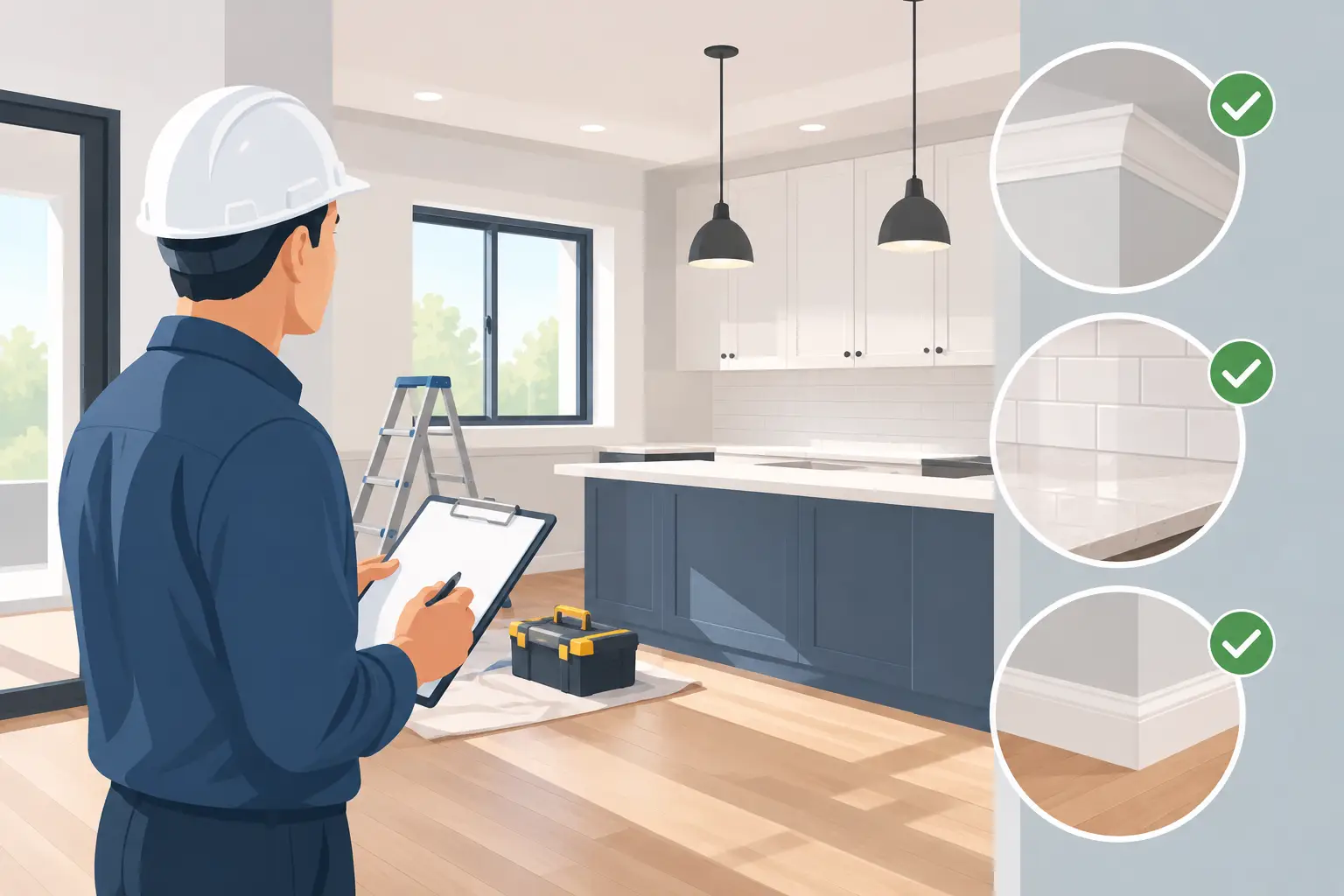
Learn how to assess renovation workmanship, spot defects early, document concerns, and protect your property before final contractor payment is released.
A fresh coat of paint and new fixtures can make a renovated property look complete while concealing poor installation, unsafe connections, and unfinished work. Knowing how to assess renovation workmanship before releasing final payment gives you the evidence needed to request corrections and protect the value of your property.
The right time to inspect is when the contractor says the work is complete, but before furniture, decorative items, or tenants hide the finishes. Walk through the property in daylight where possible, test every system, and document concerns as you find them. A professional post-renovation inspection adds independent technical oversight when the scope is extensive or defects could lead to costly disputes.
Workmanship should be assessed against what was promised. Before inspecting, gather the signed scope of work, drawings, specifications, approved material selections, variation orders, and any written messages that changed the original agreement. These documents establish whether the contractor delivered the correct item, finish, dimensions, and quantity.
Do not rely on verbal assurances that a detail is “standard” or that an omitted item was not included. If a bathroom niche, additional socket, cabinet finish, or waterproofing treatment appears in the approved scope, it should be present and completed to an acceptable standard.
Check the property room by room and compare the completed work with the agreed plan. This approach prevents small omissions from being lost among more visible cosmetic issues.
A systematic inspection is more reliable than a quick visual walk-through. Start at the entrance and follow the same route through every room. Look at high-level finishes first, then work down to walls, joinery, flooring, fixtures, and services.
Quality finishes should look intentional from normal viewing distance and remain sound under closer inspection. Stand back several feet to assess overall alignment, then move closer to inspect joints, edges, and transitions.
Look for uneven paint coverage, visible roller marks, cracks, peeling, drips, poor caulking, and rough patches around switches or door frames. Minor touch-ups may be expected after a renovation, but repeated defects across a wall or room can point to poor surface preparation.
For flooring and tiling, inspect consistent grout lines, straight tile alignment, clean cuts around corners, and secure transitions between materials. Hollow-sounding tiles, loose boards, chipped edges, lippage between tiles, or gaps at skirting boards should be recorded. In wet areas, poor grout, missing sealant, and uneven falls can become water-damage issues rather than merely cosmetic concerns.
Doors, cabinets, and drawers should open and close smoothly without scraping, sticking, rattling, or misalignment. Check that handles are level, hinges are secure, soft-close mechanisms work properly, and cabinet doors have even gaps. Joinery often looks acceptable at first glance, yet warped panels, exposed raw edges, swollen boards, and weak fixings reveal workmanship that will not last.
Bathrooms, kitchens, balconies, and utility areas deserve extra scrutiny because water intrusion can cause damage long after handover. Run taps at normal flow and check under every sink for leakage. Flush each toilet more than once. Confirm that drains clear without pooling water and that water flows toward the intended drain rather than toward walls, doors, or cabinets.
Inspect silicone joints around basins, showers, bathtubs, countertops, and backsplashes. Sealant should be continuous, neat, and properly bonded. Gaps or cracked sealant allow moisture behind finishes, where it can damage cabinetry, walls, and waterproofing layers.
If shower screens, mixers, water heaters, pumps, or filtration systems were installed, confirm that they are firmly fixed and operating as specified. Ask for warranties, test certificates, and product manuals before final acceptance.
Electrical, mechanical, and plumbing defects are not always visible, which is why this stage should go beyond checking whether lights turn on. Test every light switch, socket, exhaust fan, doorbell, appliance connection, and air-conditioning control. Confirm that switches operate the intended fittings and that faceplates are straight, secure, and free of paint marks.
Watch for warm outlets, flickering lights, exposed wiring, loose electrical accessories, tripping breakers, or unusual sounds from distribution boards. These are not punch-list items to overlook. They may indicate a safety concern and should be assessed by a qualified professional.
For air conditioning, check that each unit cools, airflow is adequate, thermostats respond, and condensate drains do not leak. In Dubai and across the UAE, air-conditioning performance and drainage are particularly important due to long periods of high cooling demand. Water staining around fan coil units, ceiling access panels, or drain lines requires prompt investigation.
Some of the most expensive renovation defects sit behind finished surfaces. You may not be able to verify concealed waterproofing, pipe routing, electrical cable protection, or structural alterations through a visual check alone. That does not mean these items should be ignored.
Request completion records for any concealed work, including photos taken before closing walls or ceilings, pressure-test results where applicable, electrical test documentation, waterproofing warranties, and approvals for alterations. For apartment renovations, confirm that required building management or community approvals were obtained. Unauthorized changes can create complications during a sale, lease, insurance claim, or future maintenance work.
Be especially cautious where walls have been removed, openings enlarged, heavy stone installed, or plumbing moved. These changes may affect building systems or require specialist approval. A contractor’s statement that the work is safe is not the same as documented evidence.
Not every issue warrants withholding all payment, but every defect should be categorized clearly. Small paint touch-ups, a missing cover plate, or a cabinet adjustment are usually straightforward snagging items. Water leaks, failed drainage, unsafe electrical work, cracked tiles caused by substrate movement, incorrect materials, or damaged joinery may be material defects that require more substantial rectification.
The distinction matters because it helps you set a reasonable close-out process. Give the contractor a written snag list with photos, room locations, and a clear description of the expected correction. Avoid vague comments such as “finish this properly.” State the issue: “Grout is cracked along the shower floor perimeter and requires removal, regrouting, and resealing.”
Assign priorities where needed. Safety, water ingress, electrical faults, and noncompliance should be addressed before cosmetic items. If the contractor disputes an item, independent inspection evidence can keep the discussion focused on facts rather than opinions.
A useful defect record answers four questions: where is the issue, what is wrong, how serious is it, and what needs to happen next? Take wide photos that establish the room and close photos that show the defect. Add a short video for drainage, door operation, leaks, or equipment faults that are easier to demonstrate in motion.
Date every record and keep communication in writing. If a contractor returns for rectification, reinspect the repaired area rather than assuming the issue is resolved. A repaired tile may match poorly, a sealed leak may reappear under use, and a painted crack may return if the underlying movement was not addressed.
For larger villas, commercial spaces, or high-value renovations, a detailed inspection report is often the most efficient way to create accountability. SmartSnag provides post-renovation inspections with clear defect documentation, photos, and rectification guidance so owners, investors, and project stakeholders can make informed acceptance decisions.
Contractors may request final payment to close their accounts, while owners want to move in or put a property on the rental market. Those pressures are understandable, but acceptance should follow verification. If the contract allows, retain the agreed balance until documented snags are completed or establish a written timeline for outstanding work.
Be fair about normal material variations and reasonable touch-ups. At the same time, do not accept recurring defects, incomplete systems, missing documentation, or work that does not match the agreed scope simply because the renovation looks presentable. The most effective inspection is the one completed before defects become your repair responsibility.