Phone:
+971 56 432 4710
Physical address:
AL KHABEESI BUILDING salah Al din street Office no G-01 - 646 Dubai

Phone:
+971 56 432 4710
Physical address:
AL KHABEESI BUILDING salah Al din street Office no G-01 - 646 Dubai
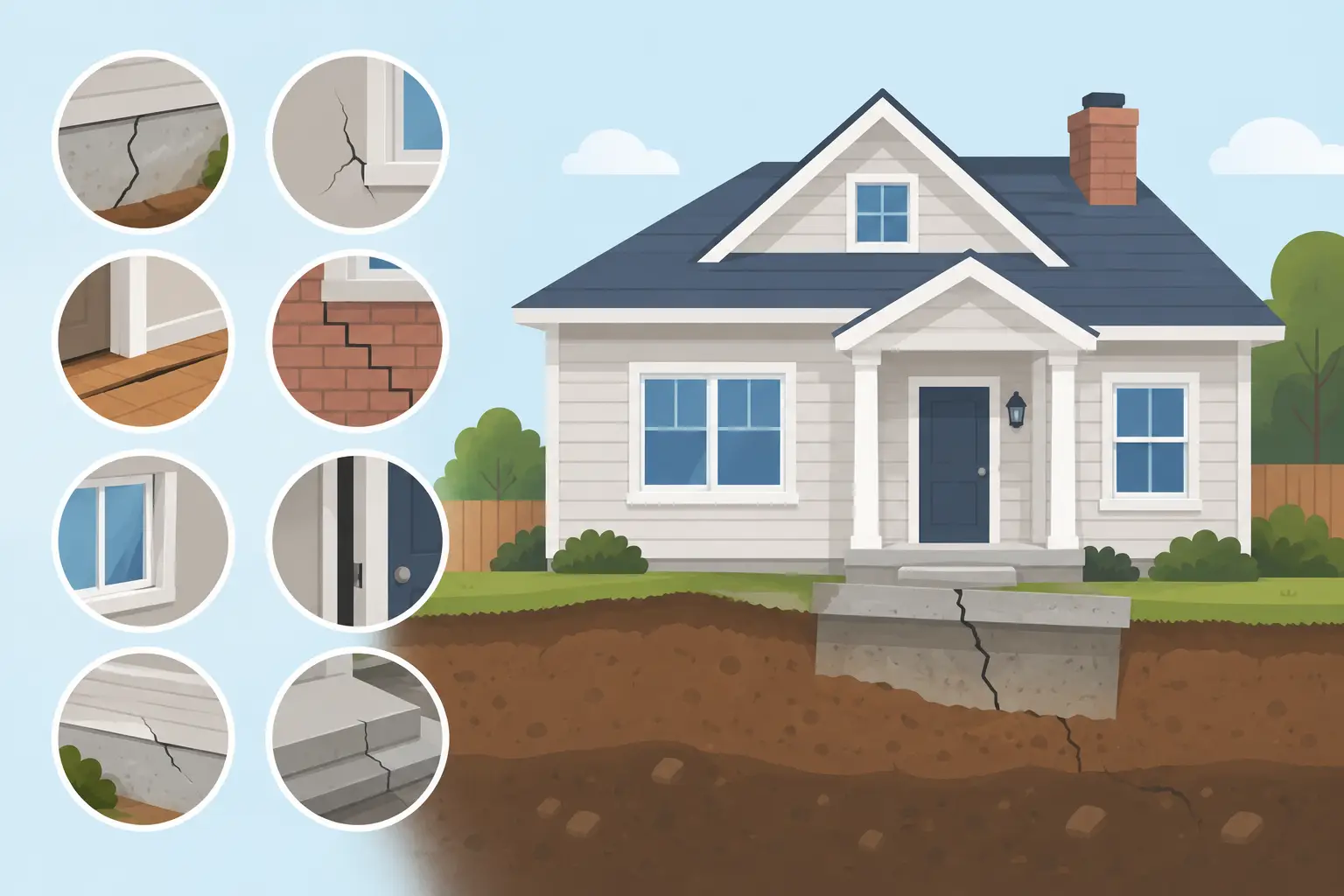
Learn the best signs of foundation settlement, what causes them, and when a certified property inspection can protect your home and investment from repairs
A small crack above a doorway can look cosmetic. A door that suddenly rubs against its frame can feel like a minor adjustment issue. When these changes appear together or continue to worsen, they may be among the best signs of foundation settlement. For property owners, buyers, and investors, recognizing the pattern early can prevent expensive repairs, protect a transaction, and create clear evidence for a developer, contractor, or seller.
Foundation settlement occurs when the soil beneath a building compresses, shifts, dries out, becomes saturated, or was not properly compacted before construction. Some degree of settlement is normal in many buildings, especially during the first years after construction. The concern is not every hairline crack. The concern is movement that is uneven, progressive, or affecting the building’s structure and systems.
Settlement does not always announce itself with one dramatic defect. More often, it appears through a combination of visible changes in finishes, openings, floors, and external walls. A professional inspection considers the location, direction, width, repetition, and likely cause of each defect rather than treating every crack as structural.
Diagonal cracks that extend from the corners of doors, windows, or openings are one of the more recognizable warning signs. These areas are natural stress points in masonry and plaster finishes. When part of a structure moves at a different rate from the surrounding area, the stress often shows up at the corner of an opening.
A thin, stable crack in paint or plaster may be related to normal drying, thermal movement, or finishing quality. A crack that widens over time, appears on both the interior and exterior, or runs through blockwork requires closer review. Cracks wider at one end than the other can also indicate differential movement rather than a simple surface defect.
Exterior cracking deserves prompt attention because it can allow water into the building envelope. Look for stepped cracks following mortar joints in block or brickwork, vertical cracks that extend through multiple levels, or cracks where an extension meets the main structure.
In UAE properties, external finishes face significant temperature changes, intense sun exposure, and occasional heavy rainfall. Not every facade crack indicates foundation movement. However, where cracking combines with internal defects, uneven floors, or gaps around openings, it should be documented and assessed as a potential settlement issue.
Doors and windows need small, consistent clearances to open, close, and lock correctly. If a door begins scraping the floor, a window becomes difficult to slide, or a latch no longer aligns with its strike plate, the frame may be out of square.
Humidity, swelling timber, poor installation, or loose hardware can cause isolated operational issues. But several sticking doors or windows across the same area of a property can point to movement in walls, floors, or the supporting structure. This is especially relevant in a newly handed-over villa or apartment where doors should have been adjusted and tested before delivery.
A floor that feels noticeably sloped is one of the clearest practical signs that needs investigation. You may notice furniture leaning, a ball rolling in one direction, gaps developing between skirting boards and flooring, or tiles cracking along a line.
In apartments, an uneven floor may result from poor screed work, tile installation defects, or localized slab issues rather than foundation settlement. In villas and low-rise properties, it may relate more directly to movement below the building. The distinction matters because the repair scope, responsible party, and long-term risk are very different.
Settlement can create visible separation where finishes and structural elements meet. Check for widening gaps between walls and ceilings, separation around kitchen cabinets, cracks where stairs meet walls, or gaps around fixed wardrobes and counters.
These defects are more meaningful when they are new or expanding. A narrow line at a ceiling junction can be a normal paint or jointing issue, particularly in a new property. A widening gap that appears alongside wall cracking and door misalignment should not be dismissed as routine finishing movement.
Tiles are rigid, so they often reveal movement before more flexible finishes do. Watch for tiles that crack without a clear impact, grout joints that open repeatedly, tiles lifting from the floor, or straight fracture lines crossing several tiles.
Tile cracking can also be caused by inadequate adhesive coverage, missing movement joints, poor substrate preparation, or thermal expansion. This is why a visual defect should never be treated as proof of settlement by itself. An experienced inspector reviews the pattern, sounds tiles where appropriate, and compares the defect with surrounding structural and finishing conditions.
Movement can strain pipes, alter drainage falls, and open joints in concealed plumbing. Recurrent leaks near the base of walls, unexplained damp patches, slow drainage, or persistent sewer odors may be connected to damaged or displaced pipework.
There are many non-structural causes of plumbing defects, including failed seals, poor installation, and blocked drains. Yet when plumbing issues occur with cracks, ground movement, or uneven floors, they can become part of a larger settlement picture. Early investigation is essential because concealed water leakage can soften soil, worsen movement, and cause secondary damage to finishes and MEP systems.
The condition of the ground around a property can provide valuable clues. Look for soil pulling away from the foundation edge, new depressions, ponding water, cracked paving, displaced boundary walls, or a driveway that slopes toward the building.
Poor drainage is a frequent contributor to foundation-related problems. Water that repeatedly collects near the structure can change soil behavior and place additional pressure on retaining walls or foundations. Conversely, excessive drying in certain soils can cause shrinkage and movement. Proper site grading, functioning drainage, and controlled irrigation all play a role in reducing risk.
The best signs of foundation settlement are rarely defined by a single measurement. A small crack in an isolated area may be low risk, while several fine cracks in a repeating diagonal pattern can justify urgent review. Severity depends on whether defects are growing, how they relate to structural lines, whether they affect doors and windows, and whether water intrusion or service damage is present.
Take dated photographs and note the crack location, approximate width, and direction. Avoid filling or repainting over defects before they have been properly recorded, particularly during a handover dispute, defect liability period, renovation claim, or property purchase. Cosmetic repairs can hide useful evidence and make it harder to establish whether movement is ongoing.
Arrange an inspection promptly if cracks are increasing, doors and windows are failing in several rooms, floors feel uneven, or leaks accompany visible movement. Buyers should also request a careful review before completing a secondary-market purchase, even if the property appears well maintained. Fresh paint, new caulking, and staged furnishings can make developing defects easy to miss.
A qualified inspection should document visible symptoms with photographs, identify defects that may require specialist structural assessment, and distinguish likely finishing issues from concerns that need further investigation. SmartSnag provides detailed property inspections that help owners and buyers create a clear, actionable record of defects before they become more costly disputes or repairs.
Foundation settlement is not something to diagnose from one crack or ignore because a property is newly built. Record changes early, protect the evidence, and have recurring or combined warning signs assessed before a minor concern becomes a major repair decision.