Phone:
+971 56 432 4710
Physical address:
AL KHABEESI BUILDING salah Al din street Office no G-01 - 646 Dubai

Phone:
+971 56 432 4710
Physical address:
AL KHABEESI BUILDING salah Al din street Office no G-01 - 646 Dubai
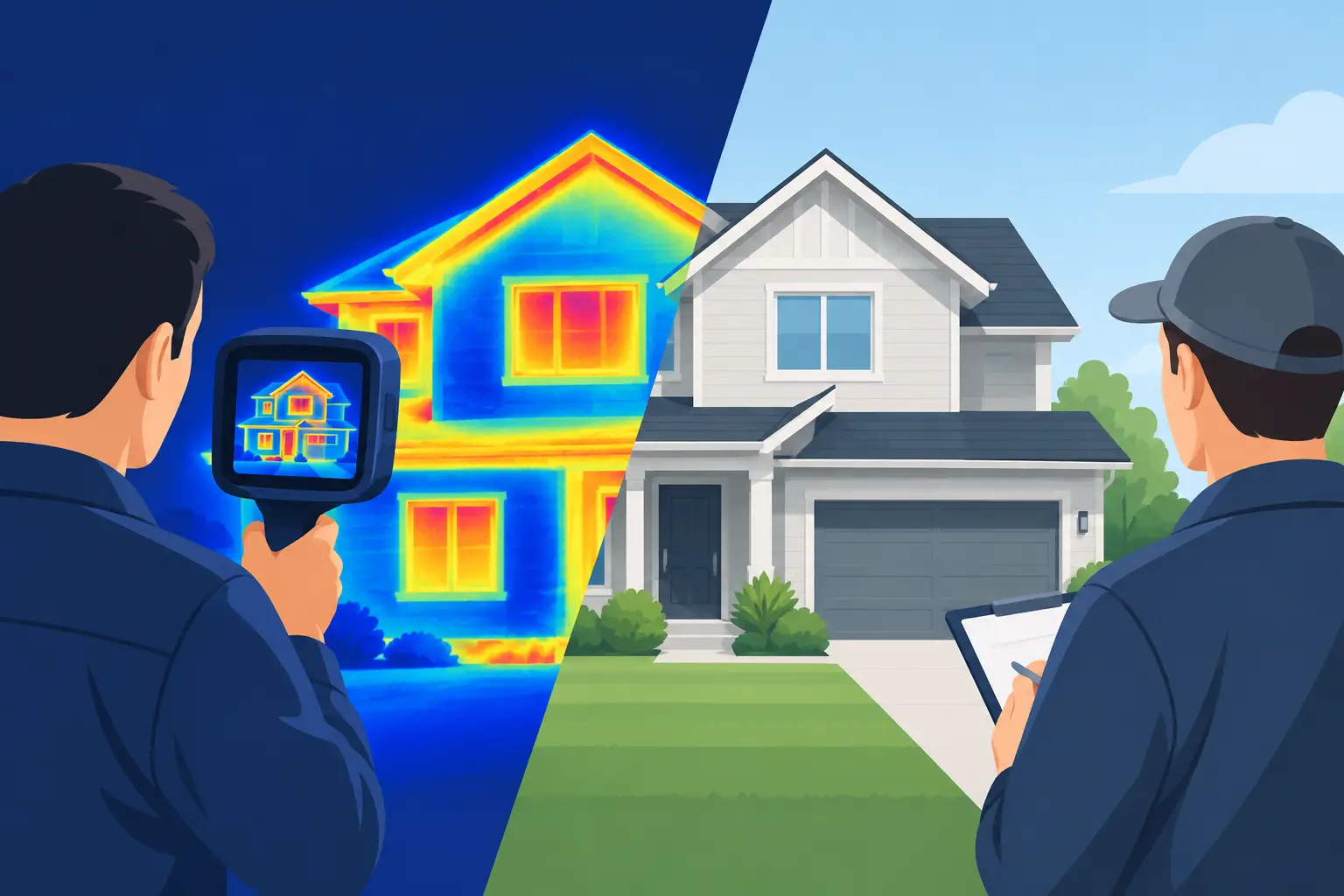
Thermal imaging versus visual inspection reveals different property defects. Learn when each method protects your UAE property investment before handover.
A freshly painted wall can conceal moisture. A cool air-conditioning vent can hide restricted airflow. A clean electrical panel can still contain overheating connections. That is why thermal imaging versus visual inspection is not a choice between a basic and advanced inspection method. Each identifies different risks, and a thorough property assessment may require both.
For buyers, owners, landlords, and investors, the objective is clear: identify defects while there is still time to require rectification, negotiate responsibly, or plan repairs. Visual checks establish the condition of what can be seen. Thermal imaging helps assess selected conditions that are developing beneath surfaces or inside operating systems. Neither replaces the other.
A visual inspection is the foundation of any credible property inspection. A qualified inspector systematically reviews accessible areas of the property, including finishes, joinery, doors, windows, bathrooms, balconies, ceilings, electrical fittings, plumbing fixtures, air-conditioning components, and common workmanship details.
This process identifies defects that are visible, measurable, or apparent during normal operation. Examples include cracked tiles, uneven grouting, damaged paintwork, poor silicone sealing, misaligned cabinet doors, loose fixtures, water stains, insufficient drainage falls, damaged glazing, and gaps around window frames. It also allows the inspector to test practical operation, such as whether doors latch correctly, water drains as intended, lights function, and air-conditioning outlets deliver airflow.
Visual inspection is especially valuable at pre-handover. Developers and contractors are generally expected to deliver a property that meets the agreed specification and acceptable workmanship standards. Clear photographs and precise defect descriptions create an accountable record for rectification. A vague comment such as “poor finish” is easy to dismiss. A documented observation such as “visible crack and hollow-sounding tile at the master bathroom threshold” gives the responsible party a clear action point.
A visual inspection cannot confirm every defect. A wall may look flawless while moisture is present behind it. An electrical connection may appear normal while generating excessive heat under load. Likewise, a ceiling stain may show that water was present at some point, but visual evidence alone may not establish whether the source is active, where it originated, or how far it has spread.
That does not make visual inspection less valuable. It means the method must be used with the right expectations. It is the essential first layer of quality control, not a guarantee that all hidden conditions are absent.
Thermal imaging uses an infrared camera to identify temperature differences across surfaces and components. The camera does not see through walls, and it does not directly detect water, defects, or electrical faults. It records surface temperature patterns. A trained inspector then interprets those patterns alongside visible evidence, system operation, property design, and, where appropriate, further testing.
In a residential property, thermal imaging can help identify unusual cool or warm areas that warrant investigation. It may indicate possible moisture intrusion around windows, balconies, wet areas, or ceilings. It can reveal inconsistent cooling distribution, insulation gaps, air leakage around openings, or unusually warm electrical components.
In the UAE, where air-conditioning systems work hard for much of the year, thermal checks can add useful context to an MEP inspection. A thermal image may show a duct area with an abnormal temperature pattern, a supply vent with weak cooling performance, or a localized issue near a condensate line. These findings should be assessed carefully because cooling mode, outdoor temperature, occupancy, sunlight exposure, and system runtime can all affect the image.
Thermal imaging is also relevant in commercial units, warehouses, and larger properties. It can support inspections of electrical panels, distribution boards, roof areas, building envelope conditions, and mechanical systems where temperature anomalies may point to developing maintenance concerns.
The main difference is straightforward. Visual inspection identifies what an inspector can directly observe and test. Thermal imaging highlights temperature anomalies that may indicate a concealed condition requiring closer review.
Visual inspection answers questions such as: Is the tile cracked? Is the sealant incomplete? Does the door close properly? Is there visible water damage? Thermal imaging supports questions such as: Is there an unusual temperature pattern behind this finish? Is one electrical component significantly warmer than comparable components? Is cooling distribution consistent across this area?
A thermal camera should never be treated as a substitute for inspection expertise. A cold patch may result from air-conditioning airflow, shade, dampness, or a construction detail. A warm spot could be caused by sunlight, active equipment, a loaded circuit, or restricted ventilation. Without inspection context, thermal images can be misleading.
The strongest approach is evidence-led. The inspector observes the physical condition, tests accessible systems, captures thermal data when conditions make it useful, and documents the finding with photographs and clear rectification guidance. This protects the client from both missed defects and unsupported claims.
For routine cosmetic concerns, visual inspection is typically the most direct and effective method. If paint is poorly finished, tiles are chipped, kitchen cabinetry is damaged, window seals are incomplete, or a shower drain does not flow correctly, thermal imaging adds little value. The issue is visible and should be documented precisely.
Visual inspection also remains the primary method when access is restricted, the property systems are not operational, or thermal conditions are unsuitable. An infrared camera depends on meaningful temperature differences. If air-conditioning has not been running, electrical circuits are not under load, or a surface has been heavily warmed by direct sun, the results may not be reliable enough to support a conclusion.
For a standard pre-handover snagging inspection, detailed visual assessment and functional testing will identify a significant range of workmanship and installation defects. The important factor is not simply walking through the property. It is applying a consistent inspection process that covers the areas most likely to create cost, delay, or dispute after handover.
Thermal imaging is particularly useful when there is a reason to investigate beyond what the eye can see. This may include a recurring water mark, suspected moisture near a bathroom or balcony, uneven room cooling, condensation around windows, or signs of electrical overheating.
It can also add value for secondary-market purchases. Older or occupied properties may have been repainted or cosmetically refreshed before sale. A visual inspection can identify apparent concerns, while thermal scanning may help prioritize areas where hidden moisture, air leakage, or cooling issues require further attention.
For landlords and tenants, thermal checks can be useful during move-in or move-out inspections where air-conditioning performance and moisture-related observations could later become points of disagreement. For developers and contractors, the same technology can support internal quality control before client handover, particularly on projects with repeated MEP or water-ingress concerns.
There are limits. Thermal imaging should not be presented as proof of a leak without supporting evidence or confirmatory investigation. It is a non-invasive diagnostic tool, not a replacement for moisture measurement, pressure testing, electrical testing, or opening up a concealed area when necessary.
The right scope depends on the property, its condition, and the risk you are trying to manage. A new apartment with visible finishing concerns may need a rigorous visual snagging inspection. A villa with roof terraces, multiple wet areas, extensive glazing, and complex cooling systems may benefit from thermal imaging as part of a broader assessment.
Consider the timing as well. Before handover, documented defects can be submitted for rectification. During the defects liability period, an inspection can identify issues that have appeared after occupancy and may still be the developer’s responsibility. Before purchasing a secondary-market property, inspection findings can support repair discussions and prevent surprise costs after completion.
A professional report should explain what was observed, where it was found, why it matters, and what corrective action is recommended. Fast reporting is valuable, but clarity is more important. You need documentation that helps the next decision happen quickly, whether that means requesting repairs, seeking specialist testing, or accepting the property with confidence.
SmartSnag approaches inspection as client protection, not a checklist exercise. Certified inspectors combine detailed visual checks with appropriate diagnostic methods to document defects in a clear, actionable format.
A property can look finished and still carry risks that become expensive only after the keys are handed over. The most useful inspection is the one that matches the property’s actual exposure, asks the right questions, and gives you evidence to act before a small concern becomes your responsibility.