Phone:
+971 56 432 4710
Physical address:
AL KHABEESI BUILDING salah Al din street Office no G-01 - 646 Dubai

Phone:
+971 56 432 4710
Physical address:
AL KHABEESI BUILDING salah Al din street Office no G-01 - 646 Dubai
Hidden Property Defects Dubai, you have waited years for your Dubai property. The developer finally sends the handover notice. Excitement takes over. But before you sign anything — there is one critical question every buyer must ask:
Is your brand-new property actually defect-free?
The answer in most cases is no. Even luxury apartments and villas in Dubai’s most prestigious developments contain hidden defects that are invisible to the untrained eye. These are not obvious cracks or broken tiles you can spot during a walkthrough — they are concealed issues inside walls, under floors, above ceilings, and inside systems that only a professional snagging inspection can uncover.
In 2026, with nearly 120,000 units scheduled for handover across Dubai, developers are working under enormous pressure to meet deadlines. The faster a project is delivered, the higher the chance of defects slipping through. Our certified Smart Snag engineers have inspected thousands of properties across Dubai and the UAE, and we consistently find the same hidden defects — even in premium developments.
Here are the top 10 hidden property defects our engineers find most frequently during snagging inspections in Dubai, and why each one matters for your investment.
Why it matters: This is the most costly defect found during snagging inspections in Dubai. Water leaks hidden inside walls, ceilings, and under flooring can cause mold growth, structural damage, and complete tile replacement — costing tens of thousands of dirhams to fix after handover.
Why buyers miss it: There is no visible sign of a leak during a basic walkthrough. The surface looks perfectly dry and finished.
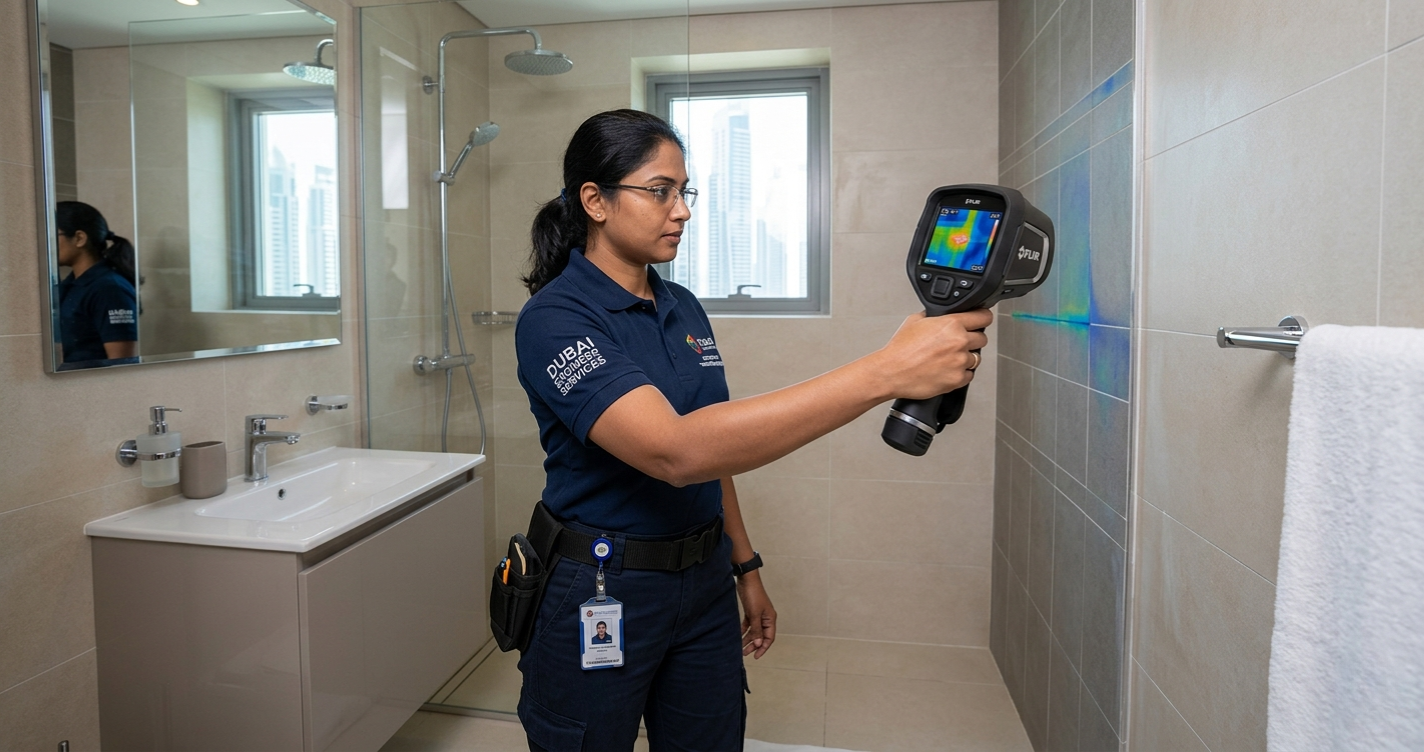
How Smart Snag finds it: Our engineers use thermal imaging cameras and moisture meters to detect hidden dampness inside walls and under floors — defects that are completely invisible to the naked eye.
Common locations: Master bathroom walls, kitchen splash areas, balcony waterproofing, roof terraces, and areas adjacent to plumbing pipes.
Smart Snag tip: Never accept handover of a bathroom or kitchen without a thermal moisture scan. A hidden leak discovered after you sign is your financial responsibility — not the developer’s.
Why it matters: In Dubai’s extreme heat, a malfunctioning air conditioning system is not a minor inconvenience — it is a major quality of life and financial issue. Faulty HVAC systems increase your DEWA bills significantly and can fail completely within months of handover.
Why buyers miss it: During a quick walkthrough, the AC may feel cold. But testing airflow, ductwork balance, thermostat calibration, and drainage requires specialist knowledge and time.
How Smart Snag finds it: Our engineers run full HVAC performance tests — checking airflow in every room, inspecting ductwork connections, testing thermostats, and verifying drainage lines are clear and correctly sloped.
Common defects found: Incorrectly sized ducting, poor airflow distribution, leaking refrigerant connections, incorrectly installed drain lines causing water pooling, and smart thermostat systems that are installed but not calibrated.
Smart Snag tip: In 2026, most new Dubai properties include smart home automation. Our inspectors specifically test IoT sensors, smart thermostats, and automation systems as standard — issues most buyers discover months after moving in.
Why it matters: Hollow tiles are one of the most common defects in Dubai properties and one of the most expensive to fix. A hollow tile means the adhesive beneath has failed. Over time it cracks, breaks, and requires full floor section replacement — often involving demolition.
Why buyers miss it: Hollow tiles look exactly the same as properly laid tiles. There is no visual difference whatsoever.
How Smart Snag finds it: Our engineers use the tap test method — systematically tapping every tile with a specialist tool and listening for the hollow sound that indicates a failed bond beneath the surface.
Common locations: Living room flooring, bedroom flooring, bathroom flooring, and kitchen areas.
Smart Snag tip: Hollow tiles are particularly common when developers rush tiling work under tight handover deadlines. In our experience, most properties have at least some hollow tiles — the question is how many and where.
Why it matters: Electrical defects are a serious safety hazard. Loose sockets, exposed wiring, overloaded circuits, and earthing failures can cause electric shocks, fires, and costly rewiring after you move in.
Why buyers miss it: Sockets and switches may look perfectly installed but be incorrectly wired internally. You cannot tell by looking at them.
How Smart Snag finds it: Our engineers use electrical testers and socket analyzers to check every single socket, switch, and circuit breaker in the property. We test earthing, polarity, RCD protection, and load capacity.
Common defects found: Sockets wired with incorrect polarity, missing earthing connections, circuit breakers that do not trip correctly, and loose connections inside junction boxes.
Smart Snag tip: Never assume a new property has safe electrical systems. Even in premium developments our engineers regularly find wiring faults that would fail UAE electrical safety standards.
Why it matters: Plumbing defects are extremely common and expensive to fix after handover. Low water pressure, blocked drainage, incorrectly sloped pipes, and hidden pipe leaks are all regular findings during our snagging inspections in Dubai.
Why buyers miss it: During a short walkthrough, taps and showers appear to work. The real issues — slow drainage, incorrect pipe slopes causing future blockages, and hidden joint leaks — only become apparent under full usage.
How Smart Snag finds it: Our engineers run water in every tap, shower, and bathroom simultaneously — testing pressure, flow rate, and drainage speed. We inspect all visible pipework connections and check drainage slopes.
Common defects found: Low water pressure in upper floor bathrooms, incorrectly sloped drainage pipes, leaking waste pipe connections under kitchen units, and incorrectly installed water heater connections.
Smart Snag tip: Always ensure DEWA utilities are connected before your snagging inspection. Without active water and electricity, a full inspection cannot be completed and critical defects will be missed.
Why it matters: While finishing defects are less critical than structural or MEP issues, they directly affect your property’s appearance, rental appeal, and resale value. Poor paintwork and uneven finishes are among the most common findings in our snagging reports.
Why buyers miss it: In artificial lighting during a quick walkthrough, paint defects are hard to spot. They become very visible in natural daylight.
How Smart Snag finds it: Our engineers inspect every wall and ceiling under both artificial and natural lighting conditions — looking for runs, brush marks, uneven coverage, color inconsistencies, and areas where walls meet ceilings or skirting boards.
Common defects found: Paint runs and drips, uneven coverage, incorrect color in specific rooms, unpainted areas behind doors and inside wardrobes, and poor finish around electrical boxes and switches.
Smart Snag tip: Paint defects are the easiest for developers to fix before handover but the most commonly ignored during their own walkthrough. Our detailed photo report ensures every finishing defect is documented and addressed.
Why it matters: Misaligned doors and windows affect security, energy efficiency, and noise insulation. In Dubai’s climate, poorly sealed windows allow hot air and dust to enter — significantly increasing cooling costs.
Why buyers miss it: Doors and windows may appear properly installed but have subtle alignment issues that only become apparent when tested properly.
How Smart Snag finds it: Our engineers open and close every door and window in the property — checking alignment, seal quality, locking mechanisms, handle operation, and gap consistency around frames.
Common defects found: Doors that do not close or latch properly, windows with broken seals allowing air infiltration, sliding doors with stiff or broken tracks, and balcony doors with inadequate weather sealing.
Smart Snag tip: In Dubai’s sandstorm season, poorly sealed windows allow dust to enter continuously. This is both a maintenance burden and an indication of energy loss — directly affecting your DEWA bills.
Why it matters: Not all cracks are cosmetic. Some indicate building settlement issues, structural movement, or construction flaws that require immediate attention. Ignoring structural cracks can lead to significantly larger and more expensive problems over time.
Why buyers miss it: Small hairline cracks are easy to overlook in a quick walkthrough, especially if walls have been freshly painted.
How Smart Snag finds it: Our engineers inspect every wall and ceiling surface systematically — documenting the location, length, width, and pattern of every crack. We assess whether cracks are cosmetic surface cracks or indicators of deeper structural issues.
Common locations: Corners where walls meet ceilings, areas around door and window frames, external walls, and floor-to-ceiling junctions.
Smart Snag tip: Diagonal cracks around door frames are a common sign of building settlement. Our engineers assess crack severity and provide clear recommendations on which defects require urgent developer attention.
Why it matters: Failed waterproofing in bathrooms, balconies, and roof terraces is one of the most expensive defects to fix after handover — because it typically requires full tile removal, waterproofing reapplication, and complete retiling.
Why buyers miss it: Waterproofing is hidden beneath tiles and finishes. There is no visual indication of a failure until water starts leaking through to the ceiling below — often discovered by the neighbor in the unit underneath.
How Smart Snag finds it: Our engineers use moisture meters to check the walls and floors of all wet areas. We also inspect visible silicone seals, drainage points, and balcony waterproofing membranes for gaps, cracks, or missed coverage.
Common locations: Shower trays, bathroom walls, balcony and terrace floors, and roof terraces.
Smart Snag tip: Waterproofing failures are 100% a developer’s responsibility to fix before handover. Once you sign the handover certificate they become your problem. This is one of the most important reasons to complete a professional snagging inspection before accepting your keys.
Why it matters: Kitchen cabinets, wardrobes, and built-in furniture are often one of the most expensive elements of a new property. Defects in cabinetry affect both the aesthetics and the functionality of your home from day one.
Why buyers miss it: Buyers tend to open a few cabinet doors and consider them fine. A detailed inspection of hinges, drawer runners, alignment, finish quality, and internal dimensions takes significantly longer.
How Smart Snag finds it: Our engineers open and close every cabinet door and drawer — checking hinge alignment, runner smoothness, door gap consistency, surface finish, and hardware quality. We also verify that all built-in furniture matches the specifications in your SPA.
Common defects found: Loose or misaligned cabinet hinges, stiff drawer runners, damaged surface finish inside wardrobes, missing soft-close mechanisms, and incorrect cabinet dimensions.
Smart Snag tip: Always check that the materials and finishes of your cabinetry match exactly what was specified in your Sale and Purchase Agreement. Developers sometimes substitute materials during construction — a snagging inspection gives you documented evidence to demand the correct specification.
Here is a realistic cost comparison of fixing common defects before versus after handover:
| Defect | Fixed by Developer (Before Handover) | Fixed by You (After Handover) |
|---|---|---|
| Hidden water leak | AED 0 | AED 15,000 – AED 50,000+ |
| Full HVAC replacement | AED 0 | AED 8,000 – AED 25,000 |
| Hollow tile replacement | AED 0 | AED 5,000 – AED 30,000 |
| Waterproofing failure | AED 0 | AED 10,000 – AED 40,000 |
| Electrical rewiring | AED 0 | AED 3,000 – AED 15,000 |
| Total potential saving | AED 0 | AED 41,000 – AED 160,000+ |
The cost of a professional snagging inspection with Smart Snag starts from AED 800. The potential saving is many times that — making it one of the most valuable investments you can make when buying property in Dubai.
Smart Snag’s certified engineers provide professional property snagging and inspection services across Dubai and all UAE emirates. We use specialist tools including thermal imaging cameras, moisture meters, electrical testers, and leveling equipment to find every hidden defect — not just the ones visible during a basic walkthrough.
Our detailed snagging reports with photos and recommendations are delivered within 12 to 24 hours of inspection — giving you everything you need to hold your developer accountable before you sign a single document.
Do not accept your property without a professional snagging inspection. Contact Smart Snag today:
📞 +971 56 432 4710 🌐 Book Your Inspection Now 📧 info@smartsnag.ae
The most common hidden defects found during snagging inspections in Dubai include hidden water leaks behind walls, faulty AC systems, hollow tiles, electrical wiring faults, low water pressure, waterproofing failures in bathrooms and balconies, structural cracks, poor paintwork, misaligned doors and windows, and cabinetry defects. These are rarely visible during a basic developer walkthrough.
While you can check for obvious visible defects yourself, hidden defects such as water leaks inside walls, electrical faults, hollow tiles, and waterproofing failures require specialist equipment including thermal imaging cameras, moisture meters, and electrical testers. A professional snagging company in Dubai has the tools and expertise to find defects that buyers consistently miss during a basic walkthrough.
Once you sign the handover certificate in Dubai, your legal leverage to demand developer repairs drops significantly. Under UAE law, developers are responsible for structural defects for 10 years and finishing defects for 1 year — but only if they are reported and documented within the Defect Liability Period. Finding defects after signing means you may have to pay for repairs yourself.
A professional snagging inspection typically takes 2 to 4 hours depending on property size and the number of defects found. Smart Snag delivers a full snagging report with photos and recommendations within 12 to 24 hours of completing the inspection.
Yes. Hidden defects are found in all property types in Dubai — including luxury apartments, villas, and branded residences. Even premium developers have sub-contractors working under tight deadlines, and defects in MEP systems, waterproofing, and finishing are consistently found across all price ranges during professional snagging inspections.
Smart Snag’s certified engineers use thermal imaging cameras to detect hidden moisture, moisture meters to check inside walls and floors, electrical testers to verify socket and circuit safety, leveling tools to check floor and wall alignment, and tap-test methods to identify hollow tiles. These specialist tools find defects that are completely invisible during a basic visual inspection.
A professional snagging inspection with Smart Snag starts from AED 800. Hidden defects discovered after handover — such as water leaks, waterproofing failures, and HVAC problems — can cost AED 15,000 to AED 160,000 or more to fix at your own expense. The snagging inspection cost is one of the best value investments a property buyer in Dubai can make.
Absolutely yes. Secondary market properties often have hidden defects concealed under renovation work, fresh paint, or furniture staging. Our pre-purchase inspection gives you full clarity on the true condition of the property before you transfer ownership — protecting you from inheriting costly hidden defects.
The Defect Liability Period (DLP) in Dubai gives developers legal responsibility to fix structural defects for 10 years and finishing defects for 1 year after handover. A DLP snagging inspection conducted before this period expires ensures all outstanding defects are properly documented and claimed before your warranty runs out.
Booking a snagging inspection with Smart Snag is simple. Contact us via WhatsApp, phone, or our website booking form at smartsnag.ae/snag-now. Share your property details and preferred date, and our team will coordinate with your developer and confirm your appointment. Your detailed snagging report will be delivered within 12 to 24 hours of the inspection.